

The Vans Marketing Strategy encapsulates how Vans, the iconic skatewear brand, transforms subculture and street style into global appeal. With roots in 1966 as a specialty skate shoe company in California, Vans evolved into a lifestyle brand synonymous with youth culture, music, and creativity. Vans stands out by authentically blending action sports, art, and fashion; it has redefined footwear and apparel marketing through experiential events like the Vans Warped Tour and the Vans Custom Culture design contests.
Vans’ impact goes beyond skateboarding—it’s tied to a broader human impulse for self-expression, belonging, and creativity. Its signature checkerboard pattern and skate-approved silhouettes resonate emotionally with customers who value authenticity and personal identity. This success is anchored by tapping into trends such as streetwear’s rise and consumer demand for personalized experiences.
In essence, Vans Marketing Strategy demonstrates how embracing subcultural roots, leveraging community-driven storytelling, and fostering creative collaboration can elevate a niche footwear brand into a global lifestyle leader—without losing its edge.
Vans Goals and Objectives
Vans has a clear and dynamic set of marketing goals and objectives, rooted in its mission to enable creative expression and celebrate youth culture. These objectives steer the brand’s strategies across footwear, apparel, and lifestyle segments and help Vans remain relevant in a competitive global market.
Strengthen Brand Loyalty
Vans prioritizes long-term loyalty by fostering emotional connections with its audience. Through events like Vans Park Series and House of Vans pop-ups, the brand builds trust and repeat engagement, especially among skaters, artists, and musicians.
Expand Market Reach
Vans actively targets new global markets, particularly in Asia and South America, where youth culture is booming. This includes tailoring product designs and marketing campaigns to reflect local tastes while maintaining core brand identity.
Grow Digital Sales Channels
The brand aims to increase its e-commerce footprint. Vans enhances its website with customization tools and immersive storytelling while optimizing mobile experiences to support younger, tech-savvy shoppers.
Engage New Demographics
Beyond core skaters, Vans seeks to attract streetwear enthusiasts, creatives, and environmentally conscious consumers. Collaborations with artists and brands like Supreme and the Museum of Modern Art (MoMA) help it access diverse segments.
Lead with Sustainability
Sustainability has become a key goal. Vans focuses on using responsibly sourced materials and reducing its carbon footprint. This resonates with younger consumers who prioritize ethical fashion.
Innovate Product Offerings
By continuously updating core silhouettes with new materials, colorways, or themes, Vans ensures its designs remain fresh. For example, themed launches inspired by retro gaming or local art appeal to niche but loyal fanbases.
Each of these objectives contributes to Vans’ continued growth, allowing the brand to evolve without straying from its countercultural roots.
Who is Vans’ Target Audience?
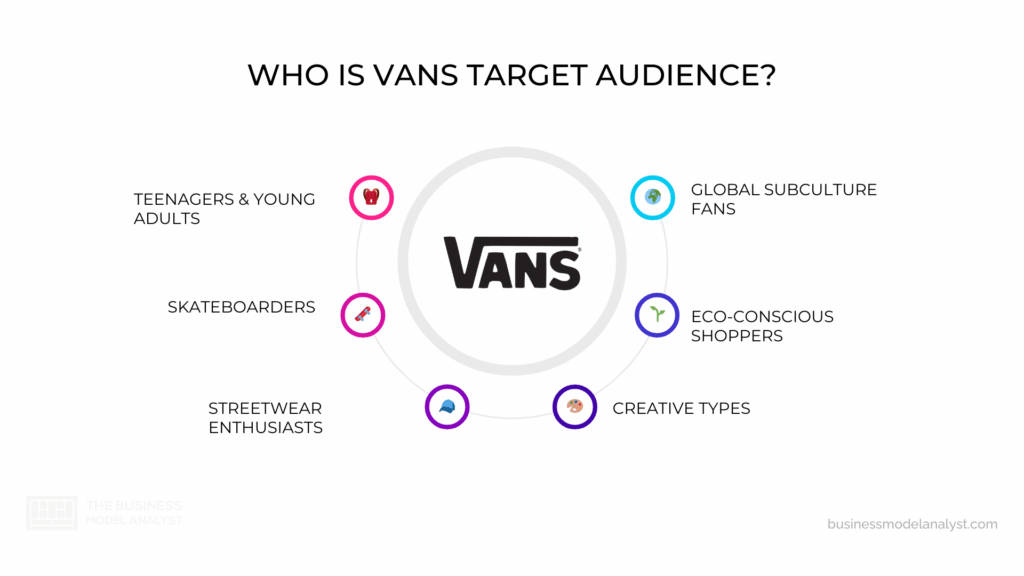
Understanding Vans’ target audience is key to grasping how the brand remains relevant across generations. Vans appeals to a mix of demographic, psychographic, geographic, and behavioral segments, all tied together by a shared appreciation for self-expression and authenticity.
Vans Demographics
Vans’ core audience ranges from teenagers to young adults, typically aged 13–30. Both males and females are targeted, with a slight skew toward male consumers in the skateboarding community. Their income level is typically middle to upper-middle class, with purchases often made by youth or their parents.
Vans Psychographics
Vans attracts individuals who prioritize creativity, individualism, and lifestyle alignment over fashion trends. These consumers are often artists, musicians, skaters, or streetwear enthusiasts who resonate with Vans’ rebellious and DIY ethos. They value brands that feel authentic and culturally grounded.
Vans Geography
While Vans originated in California and still reflects West Coast aesthetics, it now operates globally. The brand thrives in urban centers where subcultures flourish—like Tokyo, Berlin, and São Paulo—but also adapts to local tastes through region-specific collaborations and marketing. Globally, Vans tailors its outreach while maintaining its core identity.
Vans Behavior
Vans’ audience includes loyalists who buy multiple pairs over time and impulse buyers who are drawn to limited-edition releases or collaborations. Many consumers engage with Vans through events, social media, or custom design contests, blending purchase behavior with lifestyle participation.
By addressing each of these dimensions with tailored products and campaigns—like the Vans Custom Culture competition or regional skate events—Vans not only meets its audience’s expectations but becomes an integral part of their personal story.
Marketing Mix of Vans
Vans Product
Vans offers a wide array of footwear, apparel, and accessories. Core products include the iconic Era, Old Skool, and Slip‑On sneakers. Seasonal drops feature limited-edition collaborations (e.g. with MoMA or artists), printing exclusives, and special colorways. Vans Custom Culture contests and Make Your Own options let customers personalize shoes—encouraging creativity and emotional ownership.
Vans Price
Vans combines competitive pricing for core sneakers (typically mid‑range) with premium pricing for collaborations and exclusives. The base collections remain affordable, offering perceived value consistent with streetwear expectations. Collaborations command higher margins—consumers perceive added cultural capital in limited releases, making them willing to pay more. This tiered approach balances accessibility and exclusivity.
Vans Place
Vans distributes through multiple channels: branded stores (House of Vans and flagship shops), partner retailers (e.g. skate shops, large shoe retailers), and online platforms. E‑commerce includes Vans.com, regional online stores, and mobile apps. Vans also sells via Adobe‑powered customization portals (“Make Your Own”). Pop‑up events and experiential spaces in art/music venues further boost brand presence.
Vans Promotion
Vans utilizes experiential marketing, sponsorships, influencer partners, and grassroots activation. Signature events include the Vans Warped Tour, action sports competitions (Vans Park Series), and creative showcases like Vans Custom Culture. Social media campaigns highlight user-generated content and collaborations. Vans’ partnerships with artists, musicians, and subculture icons fuel word‑of‑mouth and reinforce authenticity.
What are Vans’ Strategies?
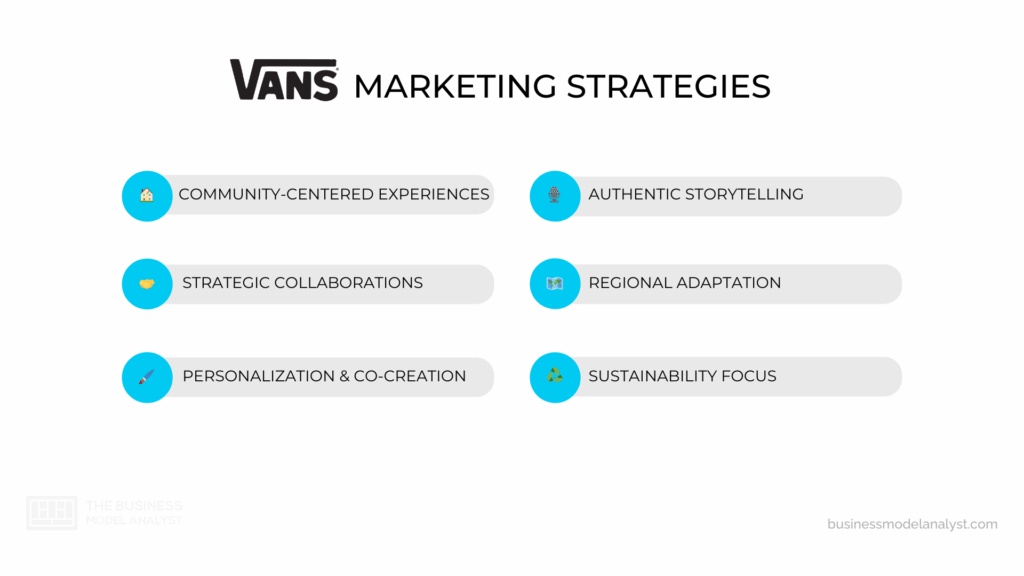
Vans employs a sophisticated mix of strategies that reinforce its status as a cultural icon, deeply rooted in creativity, community, and lifestyle.
Building Emotional Connections through Community
Vans hosts events such as Vans Park Series and House of Vans exhibitions that foster strong bonds with its audience. These activations create immersive experiences—skaters, musicians, and artists connect face-to-face, cultivating loyalty that goes beyond transactional sales.
Leveraging Influential Collaborations
By partnering with artists, streetwear labels, and cultural institutions (e.g. Supreme, MoMA, iconic musicians), Vans taps into niche audiences and gains credibility in creative subcultures. These limited-edition collaborations generate buzz and exclusivity, driving demand.
Encouraging Co-Creation & Personalization
Programs like “Make Your Own” customization and Vans Custom Culture allow customers to contribute to the design process. This personalized engagement turns buyers into co-creators, generating emotional investment and stronger brand affinity.
Storytelling Driven by Authenticity
Vans emphasizes storytelling rooted in skate and music culture through social media, editorial content, and influencer endorsements. By showcasing real skaters or artists rather than polished celebrities, the brand reinforces credibility and relatability.
Expanding via Regional Adaptation
To serve diverse markets, Vans adapts collaborations and product lines in regions like Asia, Latin America, and Europe. This strategy balances global brand recognition with local relevance, helping it stay competitive across cultures.
Focusing on Sustainability & Ethical Practices
Vans integrates sustainable materials and responsible manufacturing into select lines, like eco-conscious shoe models or performing art tie-ins that promote environmental awareness. This resonates with emerging consumers who value ethics in fashion.
Leveraging Limited Releases and Exclusivity
Strategic drops of exclusive colorways or artist series foster urgency and hype. These timed launches, often via online channels or boutique retailers, create scarcity that encourages impulse purchases and brand buzz.
Each strategy aligns Vans’ authentic voice with modern consumer demands for community, creativity, and meaning—solidifying its position as a forward-thinking lifestyle brand.
Vans Channels
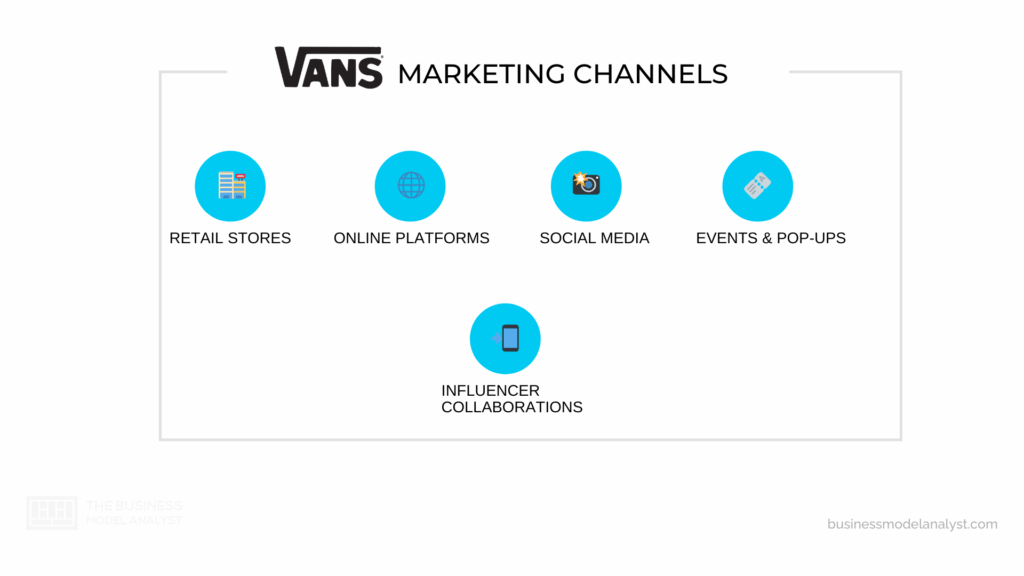
Vans utilizes a multi-channel strategy to ensure its products and messaging reach a wide and diverse audience. Each channel serves a unique role in amplifying visibility, deepening engagement, or driving sales.
Retail Stores
Vans operates standalone flagship locations and branded outlets globally. These stores are immersive brand spaces—designed not just for shopping but to reflect skate culture and creative freedom. Customers can explore new collections and even participate in local events.
Online Platforms
Vans.com and regional e-commerce sites offer a comprehensive product catalog, customization tools, and exclusive online drops. These platforms are optimized for mobile-first users, supporting browsing, purchasing, and community storytelling across devices.
Social Media
Instagram, TikTok, and YouTube are vital for Vans’ cultural resonance. The brand shares behind-the-scenes content, user stories, artist collaborations, and influencer partnerships. These platforms enable viral reach and user engagement through challenges and design contests.
Events and Experiences
Vans organizes global events like House of Vans (pop-up skateparks + music/art venues), the Vans Warped Tour, and skate competitions. These direct-to-consumer activations solidify brand loyalty and turn casual fans into community members.
Influencer and Artist Collaborations
Vans works closely with niche influencers—skaters, musicians, illustrators—who organically promote the brand within their circles. These creators amplify Vans’ reach while maintaining authenticity in messaging.
Wholesale & Strategic Partnerships
Beyond owned retail, Vans distributes through skate shops, department stores, and lifestyle retailers. These partnerships ensure access in both urban and suburban markets, maintaining Vans’ broad physical presence.
Each channel reinforces Vans’ ethos—whether through digital storytelling or real-world community hubs—ensuring a consistent yet flexible approach to global brand engagement.
How to Apply Vans Strategies to Your Business
You don’t need to be a global brand to benefit from Vans’ tactics. Here are practical strategies any business can adapt to foster loyalty, drive engagement, and build a strong identity.
Build Emotional Connections Through Experiences
Strategy: Host community-driven events that align with your brand values.
Implementation: Organize small pop-ups, workshops, or virtual meetups related to your niche.
Outcome: These touchpoints make your brand more relatable and encourage loyal, repeat engagement.
Use Collaborations to Expand Reach
Strategy: Partner with like-minded creators, businesses, or influencers.
Implementation: Start small—co-create a product or offer a service bundle. Choose partners who share your audience but offer something different.
Outcome: You tap into new networks and boost credibility by association.
Empower Your Audience with Personalization
Strategy: Let customers tailor their experience or product.
Implementation: Add customization options to your offerings—whether it’s a product design, packaging, or service plan. Use tools like Google Forms or Shopify apps for ease.
Outcome: Personal touches create a sense of ownership and increase repeat purchases.
Tell Authentic Stories
Strategy: Showcase real customers, behind-the-scenes processes, or your brand journey.
Implementation: Use email newsletters, social posts, or blog articles to share these stories.
Outcome: Transparency builds trust and emotional bonds that marketing alone can’t achieve.
Embrace Local Flavor for Global Impact
Strategy: Adapt your messaging or offers to suit regional tastes or seasonal trends.
Implementation: Use insights from sales data, reviews, or surveys to guide localized content or offers.
Outcome: You remain relevant and approachable in varied markets.
Launch Limited Releases or Flash Sales
Strategy: Create urgency through time-bound or exclusive offers.
Implementation: Tease these through social media or email. Highlight scarcity without overdoing it.
Outcome: Drives impulse purchases and adds excitement to your brand’s rhythm.
Prioritize Ethical and Sustainable Practices
Strategy: Embrace transparency and responsibility.
Implementation: Start with small changes—sustainable packaging, ethical sourcing, or local suppliers. Share your journey openly.
Outcome: Builds trust, especially with younger, values-driven consumers.
By applying even a few of these strategies, your business can stand out in a crowded market and create lasting customer relationships—just like Vans.
Conclusion
Vans has crafted a marketing strategy that’s both grounded in heritage and responsive to modern cultural currents. By aligning with creative expression, community, and authenticity, it has transcended its skateboarding origins to become a global lifestyle brand.
Its success lies in a smart blend of emotional branding, personalized experiences, local adaptation, and strategic partnerships. Vans shows that staying true to your roots—while evolving with your audience—is a winning formula.
For brands seeking lasting impact, Vans offers a model of how to connect deeply, innovate boldly, and grow without compromise.
link