
The Lego Marketing Strategy is a benchmark in brand longevity and consumer engagement, combining storytelling, innovation, and community-building to sustain global appeal. This approach has enabled Lego to connect deeply with children and adults alike, turning colorful plastic bricks into tools for imagination and shared experiences.
Founded in 1932 in Denmark, Lego started as a wooden toy manufacturer before evolving into one of the world’s most iconic toy brands. Known for its interlocking bricks, Lego has expanded into films, video games, and theme parks, all reinforcing its core value: inspiring creativity. What distinguishes Lego is its seamless blend of play and learning, consistently aligning with educational trends and the digital age.
Unlike competitors that often focus solely on product features, Lego crafts immersive universes—such as Lego Star Wars and Lego Friends—that captivate audiences through story-driven themes. Its ability to foster emotional bonds with users, while encouraging collaborative and solo play, has made Lego a household name.
In a world increasingly dominated by screens, Lego’s tactile, constructive play offers a counterbalance that taps into the human desire for hands-on creativity. This deep understanding of consumer behavior underpins a marketing strategy that’s as dynamic and modular as its products.
Lego Goals and Objectives
Lego’s marketing efforts are driven by a clear set of goals: foster creativity, maintain global relevance, and deepen emotional connections across generations. At the heart of its strategy is a mission to “inspire and develop the builders of tomorrow,” ensuring every initiative aligns with imaginative and educational play.
Strengthen Brand Loyalty
Lego aims to turn casual buyers into lifelong fans. Initiatives like Lego VIP programs and Lego Ideas, where fans submit set concepts, reward loyalists and elevate brand devotion.
Expand Global Reach
Lego targets new markets, especially in Asia and South America. By localizing content and launching culturally relevant sets, Lego ensures broad appeal without diluting brand identity.
Innovate Product Lines
The brand continually evolves—from traditional bricks to robotic kits like Lego Mindstorms and AR-enhanced playsets. These updates maintain interest among tech-savvy users.
Appeal to All Ages
Lego embraces both children and adults. Campaigns like “Adults Welcome” promote sets designed for grown-ups, such as intricate architectural models, reinforcing its all-ages appeal.
Increase Digital Integration
By enhancing its app ecosystem and gamified experiences, Lego taps into children’s digital habits while maintaining educational value, such as with the Lego Builder app.
Encourage Co-Creation
Lego invites customer collaboration, using platforms like Lego Ideas to crowdsource innovation, reinforcing its community-driven image.
Sustain Environmental Responsibility
Marketing emphasizes Lego’s commitment to sustainability, from developing plant-based plastics to carbon-neutral operations, building trust with eco-conscious consumers.
Together, these objectives solidify Lego’s place as a beloved, adaptable brand that respects tradition while embracing the future.
Who is Lego’s Target Audience?
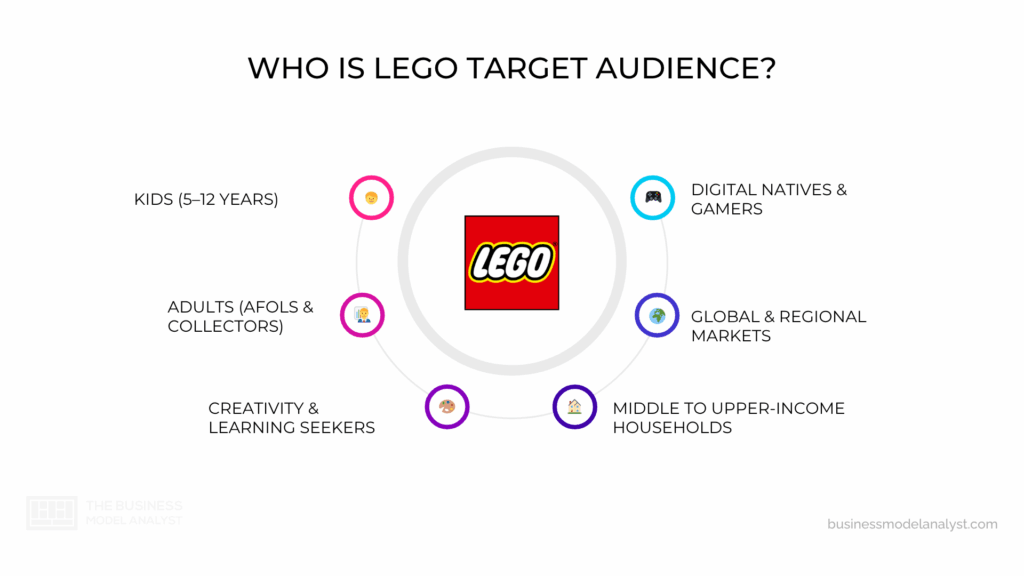
Lego’s marketing strategy succeeds by understanding and segmenting its audience precisely. By catering to various needs, lifestyles, and age groups, Lego ensures broad and sustained appeal across demographics, psychographics, geographies, and behavioral patterns.
Lego Demographics
Lego’s core demographic includes children aged 5–12, both boys and girls, who are drawn to imaginative play and storytelling. It also heavily targets adults, particularly ages 25–45, including parents, hobbyists, and collectors. With sets at diverse price points, Lego reaches households across middle to upper-income brackets.
Lego Psychographics
Lego appeals to creativity seekers, problem solvers, and nostalgia lovers. Children engage with Lego for fun and learning, while adults often see it as a stress-relief activity or a form of art. Fans value imagination, structure, and personal expression—traits that align with Lego’s build-it-yourself ethos.
Lego Geography
Globally recognized, Lego tailors marketing and products to regional tastes. In Japan, sets may incorporate anime influences; in the U.S., Lego ties into major film franchises like Marvel or Harry Potter. Emerging markets, like India or China, see educational and STEM-themed product lines that align with parental aspirations.
Lego Behavior
Lego’s customers are highly engaged. Many are repeat buyers, especially parents building a collection. Others are casual shoppers drawn by seasonal or themed products. Adults often join AFOL (Adult Fans of Lego) communities, sharing builds and participating in fan events. Meanwhile, children engage through online games, videos, and interactive apps, extending the Lego experience beyond physical play.
Lego’s ability to deliver age-appropriate messaging, whether through imaginative storytelling for children or sophisticated design challenges for adults, ensures enduring relevance and emotional resonance across consumer types.
Marketing Mix of Lego
Lego Product
Lego offers a vast range of products, from classic brick sets to themed collections like Lego Star Wars and Lego Harry Potter. Its innovation shines through in robotics (Lego Mindstorms), app-integrated kits, and adult-oriented sets like Lego Architecture. Each product fuels imagination while catering to different interests, skill levels, and ages.
Lego Price
Lego uses a value-based pricing strategy. Entry-level sets are affordable, ensuring accessibility, while complex, collector-grade kits are priced premium to reflect detail and exclusivity. Limited editions and licensed sets command higher prices, appealing to enthusiasts and collectors who value uniqueness and quality craftsmanship.
Lego Place
Lego products are sold in flagship Lego Stores, global toy retailers, supermarkets, and online platforms like Amazon and its own website. Flagship stores offer immersive brand experiences, while its e-commerce channels include digital tools like the Lego Builder app, aiding both discovery and purchase. Distribution is global, but tailored locally.
Lego Promotion
Lego’s promotional mix blends nostalgia, storytelling, and innovation. Campaigns like “Rebuild the World” spark imagination and social impact, while co-branded promotions with franchises like Marvel or Nintendo increase visibility. Lego uses social media, TV ads, influencer partnerships, and user-generated content to keep its audience engaged and emotionally connected.
What are Lego’s Strategies?
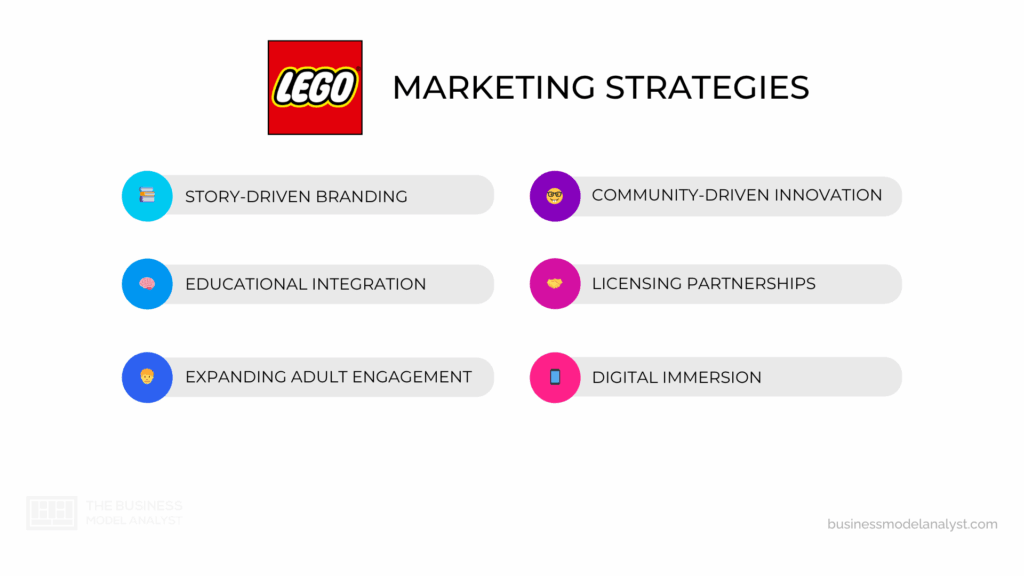
Story-Driven Branding
Lego centers its campaigns around stories, not just products. Through movies, comics, and YouTube series, characters like Emmet from The Lego Movie create emotional ties, transforming toys into narrative-driven experiences that deepen brand loyalty.
Licensing Partnerships
Lego partners with blockbuster franchises—Star Wars, Marvel, Harry Potter—to create themed sets, tapping into fan communities with the same precision that defines the Disney business model, where IP synergy and emotional branding drive massive engagement. These alliances attract fans of all ages and drive cross-promotional success, helping Lego tap into existing fanbases with instant product appeal.
Expanding Adult Engagement
With campaigns like “Adults Welcome,” Lego markets intricate sets to adults for relaxation and display. From botanical collections to famous landmarks, these kits elevate Lego from child’s play to adult artistry, expanding its consumer base.
Community-Driven Innovation
Lego Ideas invites fans to submit and vote on new set conceptss—an approach that closely mirrors the crowdsourcing business model, where users actively contribute to innovation while becoming emotionally invested stakeholders. Winning designs are produced and credited, turning consumers into co-creators. This fosters community loyalty and ensures product innovation is guided by real interests.
Educational Integration
Through products like Lego Education and Mindstorms, Lego blends fun with learning. Used in classrooms and homes, these sets teach STEM skills, reinforcing Lego’s value as both a toy and a teaching tool.
Sustainable Development Goals
Lego markets its environmental initiatives—from plant-based bricks to renewable energy in manufacturing. These efforts resonate with today’s eco-conscious consumers and future-proof its brand image.
Digital Immersion
Apps, games, and AR features extend the Lego experience digitally. The Lego Builder app guides users through interactive 3D instructions, while games like Lego Star Wars build entertainment ecosystems that drive digital engagement.
Lego Channels
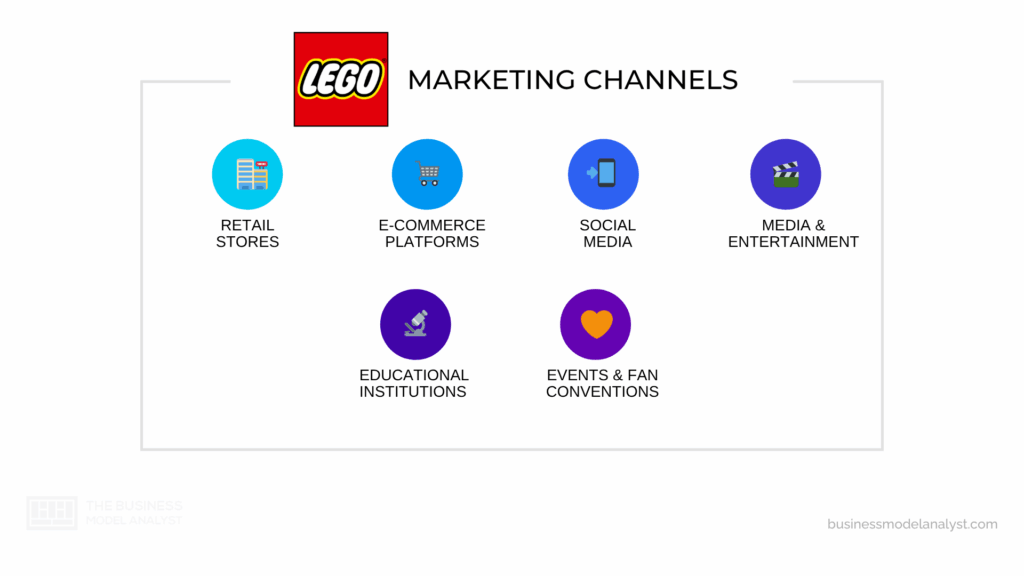
Lego uses a multi-channel approach to connect with consumers, blending retail presence, digital tools, media, and community touchpoints—much like the Starbucks business model, which thrives on experiential retail and community integration. This strategy ensures it remains accessible, engaging, and relevant across diverse customer journeys.
Retail Stores
Lego’s flagship stores are brand showcases. With interactive play zones and exclusive products, they offer immersive experiences that go beyond shopping—ideal for families and collectors seeking personal connection with the brand.
E-commerce Platforms
Lego’s official website and online marketplaces like Amazon serve both casual buyers and loyal fans. Features like the Lego Builder app support virtual building guides, enhancing the purchase journey with added utility.
Social Media
On platforms like YouTube, Instagram, and TikTok, Lego shares stop-motion videos, challenges, and user-generated content. This digital storytelling approach keeps younger audiences engaged and strengthens community around the brand.
Media and Entertainment
Through films, series, and games (e.g., The Lego Movie or Lego Star Wars), Lego builds brand awareness while generating direct and ancillary revenue. These media efforts also serve as entry points for new customer segments.
Educational Institutions
Lego Education distributes STEM-focused kits and curriculum tools to schools. These partnerships promote brand familiarity while highlighting Lego’s educational value.
Events and Fan Conventions
Lego hosts and sponsors fan-driven events like Lego World or BrickCon. These experiences deepen community ties, showcase new releases, and celebrate fan creativity.
Together, these channels create a holistic, omnipresent brand experience that drives visibility, engagement, and loyalty.
How to Apply Lego Strategies to Your Business
Build a Story Around Your Product
Lego doesn’t just sell bricks—it sells adventures. Create a compelling narrative around your offerings. For example, a bakery could share stories behind recipes, connecting with customers on a personal, emotional level. Storytelling boosts memorability and strengthens brand identity.
Leverage Co-Branding or Partnerships
Lego thrives through alliances with global franchises. You can do the same by collaborating with complementary brands. A fitness studio could partner with a nutritionist to offer bundled packages, expanding both audiences while adding value.
Empower Your Community
Lego Ideas invites customers to co-create. Encourage user participation through contests, surveys, or customer-generated content. For instance, a fashion label could ask followers to vote on seasonal designs, making them feel involved and boosting loyalty.
Expand to New Audiences Thoughtfully
Lego’s success with adults proves age segmentation works. Identify under-tapped groups who could benefit from your product with minor adjustments. A software firm, for example, might redesign its tools to appeal to creative freelancers, not just corporate clients.
Balance Physical and Digital Experiences
Lego combines tactile play with AR and apps. Your business can mirror this by integrating digital touchpoints—like virtual showrooms or mobile apps—to enhance physical services, ensuring convenience and engagement.
Highlight Your Purpose and Values
Lego’s sustainability messaging attracts conscious consumers. Share your values transparently—whether eco-friendliness, community involvement, or inclusivity. Customers connect with brands that stand for something meaningful.
Offer Scalable Product Tiers
Lego’s tiered pricing invites everyone to play. Structure your offerings to meet diverse budgets or skill levels. A service provider, for instance, might offer DIY guides, group workshops, and premium consultations to capture a broader market.
These strategies help transform businesses from product-focused to purpose-driven, customer-centric brands with lasting impact.
Conclusion
Lego’s marketing strategy exemplifies how a brand can remain timeless by blending tradition with innovation. Its focus on storytelling, community, and multi-generational appeal has redefined what a toy company can achieve. By connecting emotionally with users and adapting to evolving trends, Lego continues to thrive in both physical and digital worlds.
From building blocks to blockbuster films, Lego has expanded its influence across industries while staying true to its mission of inspiring creativity. Its success offers valuable lessons for any business: listen to your audience, evolve with purpose, and never underestimate the power of imagination. In doing so, Lego proves that even the simplest idea—like a brick—can build an empire.
link