
Twenty years ago,
I was leading a technology company and sat across the table from a public
relations team. They told me I needed a thought-leadership plan. My response
was quick and blunt: “What I need are leads and prospects, and I don’t know how
thought leadership is going to do that. This meeting is over, because what I
need are more phone calls and more sales.”
At the time, I
couldn’t see the connection between visibility and growth. I believed hustle,
persistence and hard work were the only ways to achieve success. What I didn’t
realize was how much faster and easier it is to grow a business when you’re
already seen as an expert. When your ideas are known in the market, people seek
you out. Your reputation establishes familiarity and trust, before you introduce
yourself or make your sales pitch.
I sometimes
wonder where I’d be today if I had taken that advice — how much faster my
business could have grown or how much my career could have accelerated. Because
now I know: Every business leader or senior executive needs a
thought-leadership strategy.
The high cost of being overlooked
In a joint study by LinkedIn and Edelman, 89% of business decision-makers said thought
leadership improves their perception of an organization. Nearly
half indicated that it had directly led them to award business. If your
competitors are showing up in reputable media platforms, social media feeds and AI datasets and you’re not, you’re giving them the competitive advantage.
Yet, many executives remain relatively unknown despite their
proven personal abilities and the clear advantages of thought leadership. Their
accomplishments might earn respect within their organization or professional
network, but their opinions or insights are a mystery beyond their immediate
circle. This lack of visibility can get in the way of board appointments, media
exposure, strategic partnerships and industry influence.
The risks associated with anonymity rise as more people
use AI to research you and your organization. If tools like ChatGPT,
Perplexity and AI-enabled search engines cannot easily discover your
achievements, summarize your leadership contributions or distinguish you from
others in your field, your silence becomes a reputational liability.
The long reach of thought leadership
The goal of an effective strategy is not to manufacture
influence, but to amplify it. Authority is strengthened when leaders consistently
articulate their perspectives and share their insights, whether by publishing opinion
articles, contributing to industry panels or maintaining a consistent digital
presence.
A leader’s influence creates favorable outcomes that
ripple across the organization. As I’ve already noted, executives with high brand authority enhance the reputation and credibility of
their organization, often when it matters most. When the company is challenging
a more established brand, thought leadership builds awareness that leads to
purchasing decisions. It improves the overall perception of the brand and can even lessen the consequences of
controversy. A robust executive brand can also attract talented employees who want to follow visible, values-aligned leaders.
Still, many resist the idea of greater visibility. They
might not want to talk about themselves or simply believe that their work
should speak for itself. But in a saturated, attention-seeking economy,
unspoken excellence is invisible excellence. Credibility is no longer earned or
implied. It must be communicated clearly, frequently and with authority.
That understanding requires executives to ask difficult
but necessary questions. Do the people who matter most to my career and company
clearly know what I stand for? Can others easily describe my impact, leadership
style, and expertise? Am I actively shaping my narrative — or allowing it to be
shaped for me? If you can’t answer “yes” to these questions, you need a thought-leadership
plan.
How to build a thought-leadership strategy
The most
effective strategies are deliberate and disciplined. Be patient, as it can take
time to hone your message and find a strategy that works for you. Start with
these fundamentals:
1.
Define your audience. Speak
directly to the decision-makers in your industry. Even if your content reaches
a smaller audience, it will have more impact than a broader message.
2. Focus on
your expertise. Identify the challenges you can solve and offer your unique insights. Build your authority and reputation
by offering an original perspective or solution.
3. Be authentic. Share your genuine experiences, not the
latest marketing pitch. If your content is too sales oriented, you risk
alienating your audience.
4.
Stay consistent. Establish a
publishing schedule, and stick to it, just as you would any other business
strategy.
5.
Amplify your message. Once you’ve
created something, distribute it across multiple channels. Turn your podcast
recording into a blog post; include key takeaways in a monthly newsletter; edit
the video for Instagram or LinkedIn.
6.
Engage directly. Ask for
feedback and respond to comments. Remember, you’re aiming for long-term
relationships, not limited transactions.
From visibility
to authority
Thought
leadership is more than a way to build a strong personal brand. It amplifies credibility and establishes
executives as authoritative voices in their fields. It allows you to steer the
conversation in a way that encourages others to listen to you and seek out your
opinion.
Still, thought
leadership and personal branding are complementary. Your brand makes you
relatable and authentic. Thought leadership makes you credible and
authoritative. Together, they accelerate your personal career trajectory and
your organization’s success.
Those who choose
thought leadership aren’t leaving their reputation to chance, nor are they
simply chasing attention. Their focus is on a bright future, and they’re
building momentum.
About the Author
Donald Thompson,
EY Entrepreneur Of The Year® 2023 SE Award-winner, founded The
Diversity Movement, a Workplace Options Company, to fundamentally transform the
modern workplace through diversity-led culture change. Recognized by Inc.,
Fast Company and Forbes, Thompson is author of Underestimated:
A CEO’s Unlikely Path to Success,
hosts the podcast “High Octane Leadership in an
Empathetic World” and has published widely on leadership and
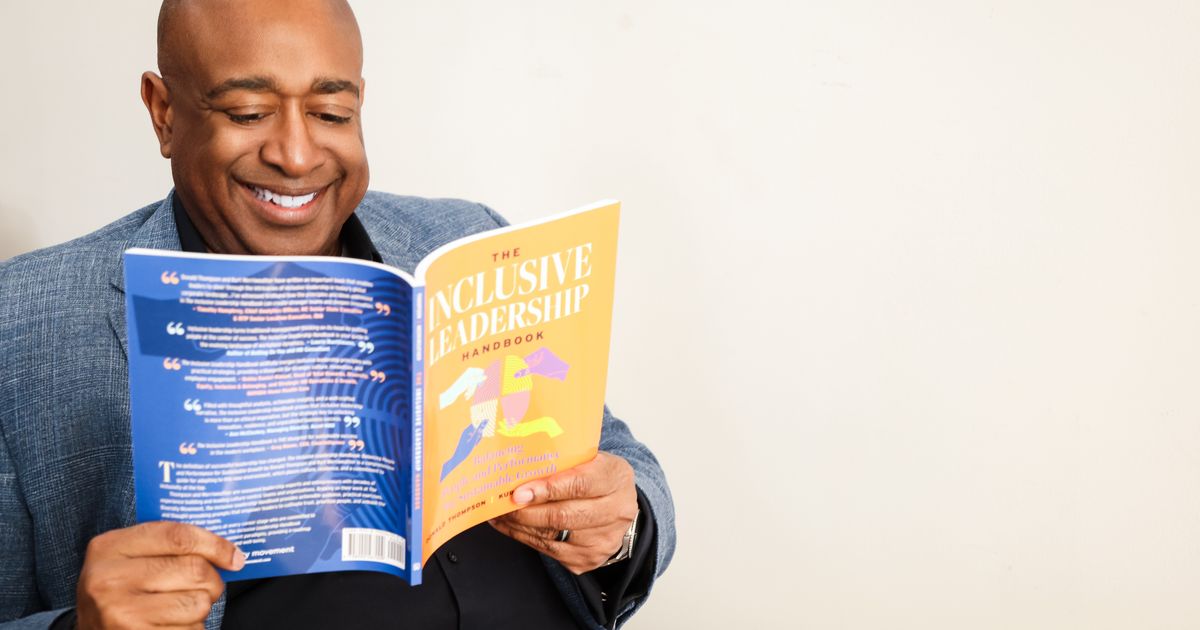
the executive mindset. His latest book is The
Inclusive Leadership Handbook: Balancing People and Performance for
Sustainable Growth, co-authored with Kurt Merriweather, Vice
President of Global Marketing at Workplace Options. Follow Thompson on LinkedIn
for updates on news, events and his podcast, or contact him at [email protected]
for executive coaching and speaking engagements.
link